Introduction
Introduction
Current Location: Home >> Introduction
Sichuan Tourism University
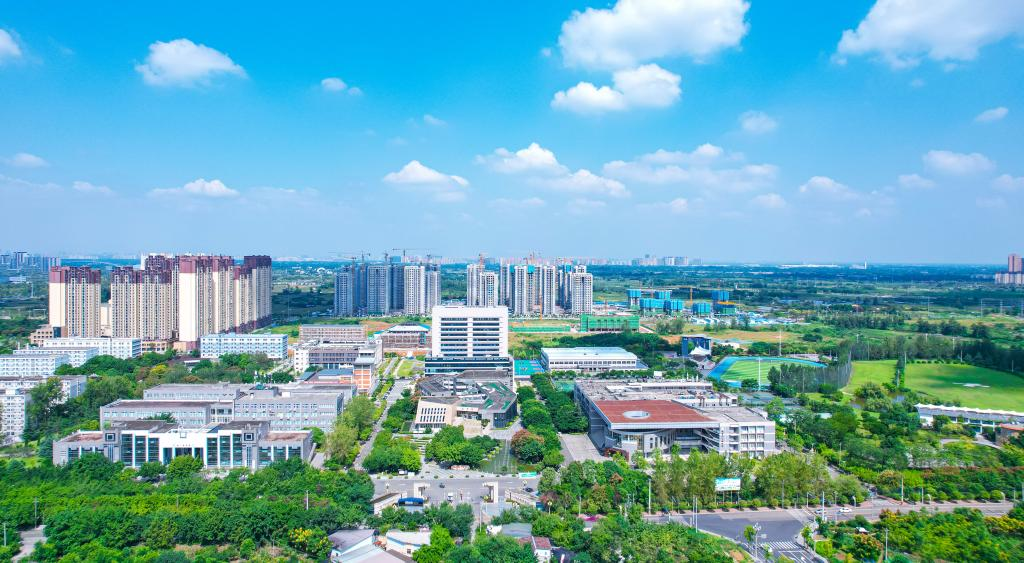

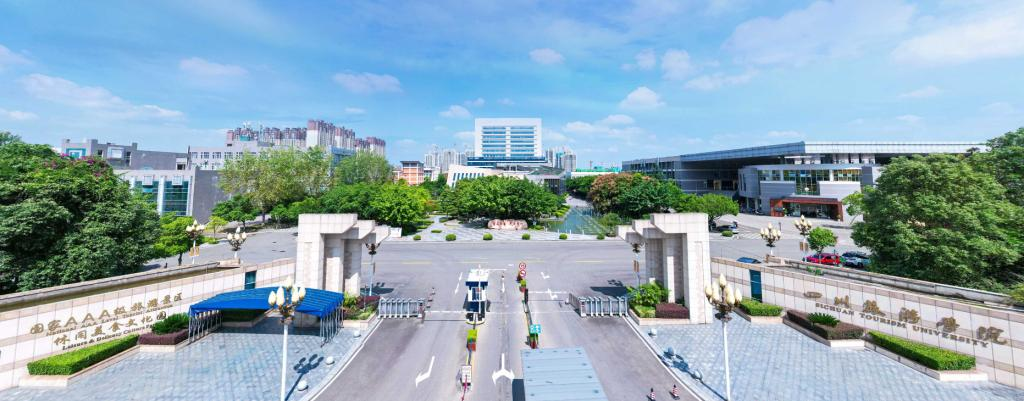
Sichuan Tourism University is one of the earliest full-time public undergraduate universities in China named after "tourism."It is a comprehensive institution distinguished by its prominent culinary disciplines and tourism-oriented academic layout. The university has been awarded multiple provincial and national titles, including one of the country’s 100 pilot universities under the Applied Undergraduate Industry-Education Integration Development Project, a pilot university for Sichuan’s comprehensive Three-Pronged Education reform, a pilot institution for the provincial-wide transformation of undergraduate colleges, a Base for Promoting Chinese Cuisine Culture under the Overseas Chinese Welfare Project run by the Overseas Chinese Affairs Office of the State Council, and a designated institution for the preservation of the fifth batch of national-level representative intangible cultural heritage items. Sponsored by the People’s Government of Sichuan Province, the university originated from Sichuan Catering and Service Technical College founded in 1976. Sichuan Culinary College was formally approved by the Ministry of Education in 1985, then merged with Sichuan Provincial Agricultural Management Cadre College in 2013 to establish Sichuan Tourism University. The university passed the national undergraduate teaching quality evaluation in 2021 and was listed as a key cultivation university in Sichuan’s new master’s degree authorization construction plan in 2023.
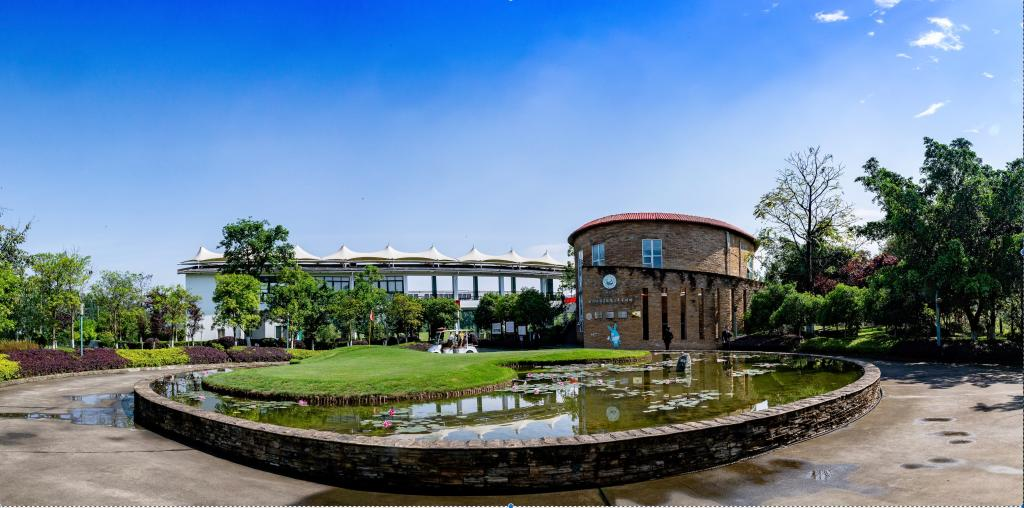
Located in Chengdu, a national historical and cultural city and core central city of Southwest China, the university nestles at the foot of Longquan Mountain beside Dong’an Lake. It takes Longquan Campus as its main campus and runs three branch campuses namely Beixiangzi, Qingjiang and Qingyang, covering a total area of 1,008 mu. The campus houses Leisure and Culinary Culture Park, a national 3A-level tourist attraction, alongside landmark facilities including the Culinary and Food Experimental Management Center known as “China’s Top Training Kitchen”, the country’s first standardized rock climbing venue and China’s first professional golf education and training complex, forming a distinctive spatial feature where the campus lies within a scenic zone and the scenic zone integrates into the campus.
The university consists of 13 secondary colleges, offering 38 undergraduate majors and six associate degree programmes with nearly 12,000 full-time students on campus. Its library collects 1.27 million printed books and over 730,000 electronic books. In recent years, SCTU has pushed forward high-quality and substantial development, centering disciplinary construction and master’s degree authorization application while matching national key industrial strategies and local industrial demands. It has launched three core development plans: three core development strategies: the Culinary Everest Program, the Tourism Plateau Project and the High-End Discipline Development Initiative.Centering on the entire industrial chain of "big tourism," it has carried out the layout of disciplines and majors, forming a discipline and major system with distinctive advantages in culinary food, digital cultural tourism, and mountain tourism.Food Science and Engineering is selected into Sichuan’s Gongga Plan under the provincial Double First-Class program. Culinary and Nutrition Education is recognized as a national first-class undergraduate major, while ten majors including Tourism Management, Hotel Management and Leisure Sports are certified as provincial first-class applied demonstration majors or comprehensive reform pilot majors. The university owns five national first-class courses, two national high-quality resource-sharing courses, three MOE Hongzhi Zhuhang career development courses and one MOE Outstanding Teacher course, plus 84 provincial-level courses covering first-class undergraduate courses, applied demonstration courses, high-quality open online courses, innovation and entrepreneurship demonstration courses, curriculum-based ideological courses, advanced courses and high-quality courses for international students.
SCTU acts as the vice-chair unit of the National Vocational Education Teaching Guidance Committee for Catering under the Ministry of Education. It operates seven provincial and ministerial research platforms: Sichuan Provincial Research Base for Consolidating the Sense of Chinese National Community, Cultural-Tourism Integrated Development Research Center, Collaborative Innovation Center for Sichuan-Tibet Tourism Industry Competitiveness, Collaborative Innovation Center for Sichuan Cuisine Industrialization and Internationalization, Sichuan Cuisine Development Research Center, Sichuan Provincial Key Social Science Laboratory for Artificial Intelligence in Gastronomy, and Mountain Tourism Safety Key Laboratory. Two provincial science popularization bases are also settled on campus: Food Education Science Popularization Base and Gastronomy and Tourism Culture Popularization Base. The university will complete the compilation and publication of the Series of Classical Chinese Culinary Culture Texts by 2025, leveraging its research platforms to advance the creative transformation and innovative development of traditional Chinese culinary culture. Committed to serving national major strategies and regional economic growth, the university has achieved steady progress in both applied and fundamental research through organized interdisciplinary research teams targeting key research orientations aligned with its disciplinary strengths. Over the past three years, it has undertaken 120 national and provincial research projects including National Social Science Fund and National Natural Science Fund projects, with total research funding exceeding 100 million RMB.
The university prioritizes faculty development and employs more than 1,200 teaching and administrative staff. Over 40 percent of full-time academic staff hold senior professional titles, and more than 28 percent hold doctoral degrees. It boasts one national-level teaching team and ten provincial and ministerial-level teaching teams. Thirteen faculty members have won top honors such as recipients of the National High-Level Talent Special Support Programme, National Outstanding Teachers, national intangible cultural heritage representative inheritors and leaders of national skill master studios. Five staff members serve as committee members of MOE teaching guidance committees; recipients of the MOE New Century Excellent Talents Programme or experts selected into the Ministry of Culture and Tourism National Tourism Ten-Thousand Talent Programme. More than 100 faculty hold provincial prestigious titles including Tianfu Qingcheng Plan leading talents, Tianfu Craftsmen, Tianfu Emei Plan entrepreneurial talents, Sichuan academic and technical leaders and reserve candidates, distinguished provincial experts with outstanding contributions, provincial distinguished teachers, provincial Four-Quality Model Teachers and provincial advanced workers; as well as more than 60 person-times of well-known industry experts and talents such as China food safety experts, intangible cultural heritage experts, and Tianfu famous chefs.
The university adheres to an internationalization development strategy and has established cooperative ties with over 60 well-known universities across 19 countries and regions including the United States, the United Kingdom and France through its global partnership network. To date, more than 200 faculty members have participated in overseas academic exchange programmes, the university has launched the Outstanding Talent Overseas Incubation Programme, and it regularly arranges overseas internships and employment opportunities for students at international practice bases. It has pioneered an innovative culinary diplomacy model by co-founding 12 Chinese Sichuan Cuisine Academy overseas branches in 11 countries including the Netherlands, Italy, Australia, Morocco, Singapore, South Korea and Japan, building an integrated international platform for cultural communication, skill inheritance and industrial promotion. The university has been selected for the MOE China-EU Education and Cultural Exchange Programme, takes the lead in drafting regional tourism education standards, participates in the EU Erasmus+ programme to run the second Chengdu Sejong Academy, co-establishes Southwest China’s first Sino-French engineering platform with France’s EPF Engineering College to jointly deliver the Architectural Electrical Engineering and Intelligent Systems program, and offers training programs for international students from 15 Belt and Road countries such as Thailand, Bangladesh and Nepal.
The university continuously deepens university-local government and university-enterprise collaboration, and advances industry-education integration. It holds important positions in major industry associations including vice presidency of the World Chinese Cuisine Association, chairmanship of the International Culinary Education Branch and director membership of the Education Working Committee of the China Hotel Association. It also serves as vice-chair of four national and provincial industry-education integration consortia covering ideological education and study tours, wellness and elderly care tourism, Chengdu-Chongqing Economic Circle applied university alliance and provincial integrated aesthetic education consortium. The university maintains stable cooperative relations with multiple Sichuan provincial government departments including the Department of Culture and Tourism, Forestry and Grassland Administration and Department of Science and Technology, as well as municipal and prefectural governments of Leshan, Ya’an, Ziyang and Aba. It also partners with over 100 enterprises, industry associations, research institutes and peer universities such as Sichuan Tourism Investment Group and the World Chinese Cuisine Federation to carry out joint training and cultural tourism projects. The campus is equipped with 189 specialized experimental and training laboratories and 266 off-campus internship and practice bases. It has obtained approval for 75 joint talent cultivation projects under the MOE Industry-Education Collaboration Initiative, and teaching research results led or co-developed by the university have won 11 provincial-level or higher teaching achievement awards. The university actively participates in industry standard formulation and has presided over or participated in drafting more than 40 international, national and industrial standards and specifications.
The university has remained faithful to its educational mission throughout decades of development. Over its 50-year history, it has kept pace with the inheritance of Chinese culinary culture and the growth of the tourism industry. Guided by its college motto “Read ten thousand books; travel ten thousand miles”, it has formed its distinctive institutional spirit featuring perseverance, dedication, professional expertise and innovation. Since its foundation, the university has cultivated more than 100,000 outstanding professionals for the catering and cultural tourism industries. In recent years, its graduate employment rate has stayed above 90 percent with high-quality employment proportion exceeding 60 percent, ranking among the top universities in Sichuan Province.
Looking forward, the university maintains firm motivation and clear development orientation. It adheres to its core development philosophy of internal cohesion, external expansion, local rooting and pursuit of excellence, and implements five major development strategies: strengthening the university through talent cultivation, advancing development via industry-education integration, expanding global influence through international cooperation, lifting institutional reputation through brand construction and boosting development via digital transformation. Rooted in its mission of empowering national tourism development, the university unites faculty and students to respond to core educational and industrial development questions with practical actions, strives to build a world-class distinctive applied university, and contributes sustained strength to the modernization drive and the great rejuvenation of the Chinese nation.
(Data as of June 20, 2026)